









Littering isn’t just a nuisance—it’s a real environmental problem—and a costly one at that. In Switzerland, discarded cigarette butts alone generate annual cleanup costs of 52 million francs. But cigarette butts are more than just unsightly: They contain toxic substances, seep into the groundwater when it rains, and decompose very slowly. This is exactly where taketray comes in with a portable ashtray made from recycled plastic: functional, suitable for everyday use, and so inexpensive that it can be distributed for free.
The idea behind taketray: functional, practical, and affordable
The story of taketray began over 20 years ago on a beach in Italy. Founder Mauro Vignali noticed that his girlfriend at the time was the only one who picked up her cigarette butts. It was clear to him: Most smokers don’t throw their butts away out of ignorance, but because they lack a suitable place to dispose of them.
When Zurich introduced its first littering law years later, Vignali saw his chance. With the ZA1, he developed the first portable ashtray—an elegant, designer piece made of aluminum. But the market wasn’t ready: 25 francs for an ashtray was too much, and the fines were rarely enforced. The sobering realization: As long as littering has no consequences, nothing will change.
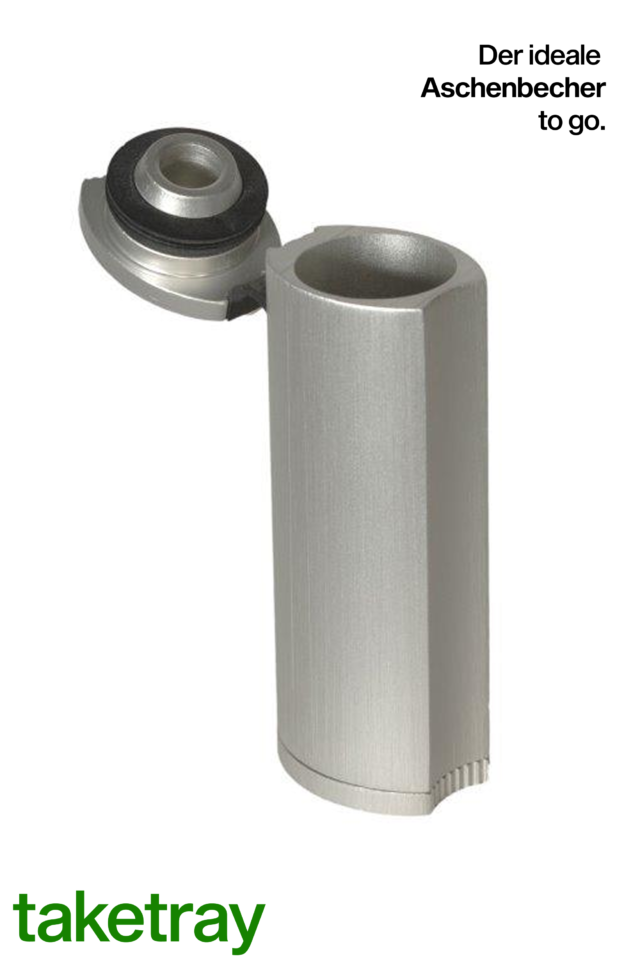
A Fresh Start with Plastics and a Strong Partner
The key insight came ten years later: Only a functional ashtray that can be distributed for free has a real impact. In collaboration with the Institute for Product Design, Development, and Construction (IPEK) (Link: https://www.ost.ch/de/research-and-services/technology/mechanical-engineering/ipek-institute-for-product-design-development-and-construction), a well-designed plastic ashtray was developed that meets all the needs of smokers and stands the test of everyday use.
Achieving Sustainable Success with Silac
Originally, taketray had its products manufactured in China. But it soon became clear that quality, flexibility, and sustainability made Switzerland the better choice for production. The company chose Silac, a family-run business with extensive expertise in processing recycled plastics.
Silac supports the project with a full range of services: from tooling development to manufacturing and digital printing. Mauro Vignali is thrilled:
“Our collaboration with Silac has been excellent and solution-oriented from the very beginning. They’re a partner who really thinks along with us.”
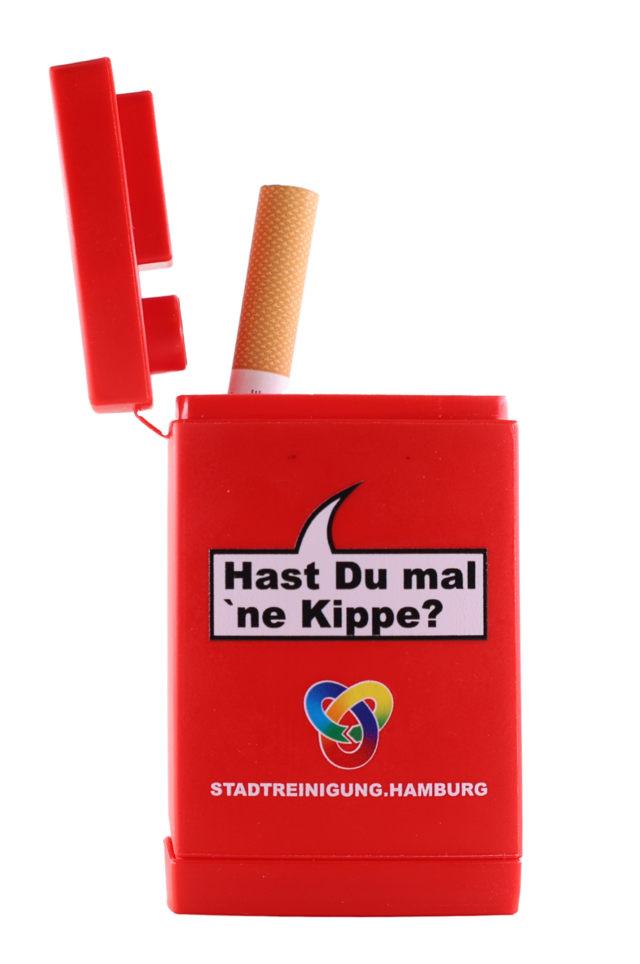
There are currently two models available in the taketray online store:
• Made from recycled plastic from Switzerland
• Made from ocean plastic
Littering in Switzerland: An Expensive Environmental Problem
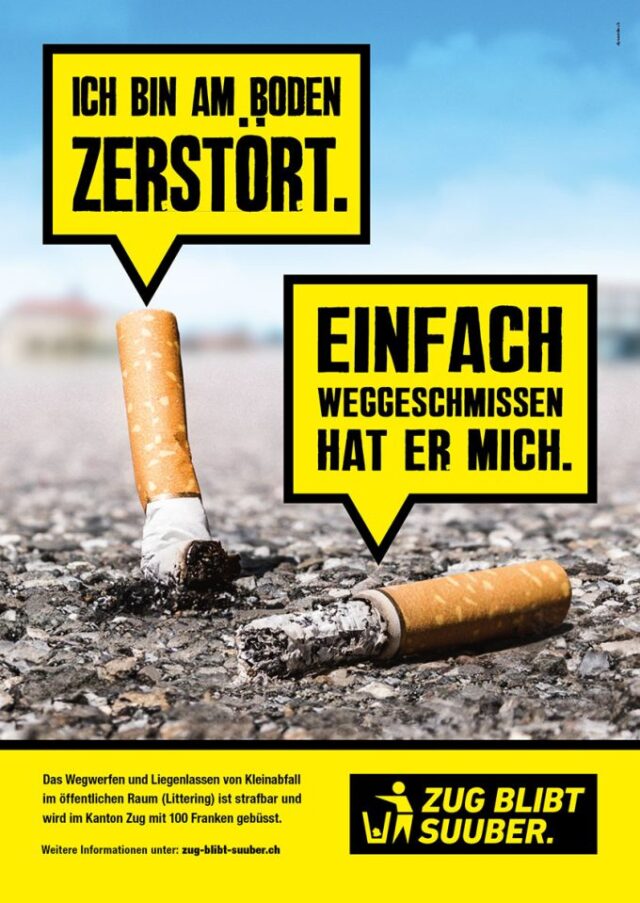
Cigarette butts litter not only streets and public squares, but also playgrounds, meadows, hiking trails, and ski resorts. Cities and municipalities rely on public education, cleanup efforts, or fines. But many laws remain ineffective because they are rarely enforced. Basel is taking a consistent approach with its environmental police—but that is the exception.
A national ban on littering is set to take effect in May of this year. Does that mean the problem is solved? Probably not. A lasting impact can only be achieved through a combination of legislation, prevention, and targeted education.
A Lesson from the United Kingdom: How Prevention Works
Under the slogan “Keep Britain Tidy,” the United Kingdom launched a nationwide, two-year anti-littering campaign in 2022. The campaign included a series of measures designed to discourage smokers from discarding their cigarette butts while out and about. Among these measures was the free distribution of over 10,000 taketray ashtrays, which could be ordered online.
Here’s how it works in the United Kingdom:
A national survey showed that cigarette litter in public areas decreased by 17%. The conclusion: Prevention is more effective than cleanup. The best and most cost-effective approach is to prevent smokers from littering in the first place. A combination of clear messages and practical solutions is key.
Free Ashtrays—The Solution?
For Mauro Vignali, one thing is clear: smokers will only change their behavior if they have the opportunity to do so. Littering is not a behavioral issue, but a waste disposal issue. Only when every smoker always carries a portable ashtray with them can social pressure take effect. For this to work, the ashtray must be available free of charge.
But who will pay? Many cities and municipalities are hesitant to invest in such measures because, while littering is a problem, it is often not a top priority. Experts are therefore calling for the tobacco industry and retailers to be held more accountable.
Strategic Driver: Expanded Product Liability in the EU
EU legislation on extended product liability is a lever with a significant impact. Since December 2018, cigarette manufacturers and retailers have been required to help cover the costs of littering. In Germany alone, the annual costs are estimated at 225 million euros. The widespread distribution of free taketrays would cost only a fraction of that—and would have a measurable impact. Once this legislation is consistently enforced, it should become clear to the tobacco industry as well: portable ashtrays are part of the solution.

Conclusion: Small step—big impact
taketray is more than just a product. It is a call to action and proof that sustainable solutions can work. Together with partners like Silac, a simple idea is transformed into a powerful tool in the fight against environmental pollution.
Campaigns in the United Kingdom show that offering smokers concrete alternatives can reduce littering. What is needed now is the will to take this approach in Switzerland as well. As the European market leader, taketray has demonstrated that innovative products can drive social change.
An ashtray in your pants pocket—for clean streets and a clean future.
“We want portable ashtrays to become the norm—just like reusable cups for coffee,” Mauro Vignali.