









Circular Economy
Circular Economy Through Material Testing, Use of Recycled Materials, and Collaborative Development
For Silac, plastic is not just a material for a single product. What matters most is how the material can be used, processed, reused, and kept in the cycle for as long as possible.
There are no simple answers here. Recycled materials must be available, processable, and suitable for the specific application. Especially for packaging with high standards, tested materials, reliable processes, and close collaboration throughout the value chain are essential.
What Circular Economy Means at Silac
Silac reduces material waste, reuses suitable production byproducts, and uses recycled materials wherever it makes sense from a technical, quality, and economic standpoint. Three areas are central to this approach:
Reduce Material Waste
Plastic scraps are generated during production. Suitable thermoplastic scraps are inspected, processed, and reused—for example, in expansion joints for construction, which are made entirely from recycled plastic.
Properly Process Recycled Materials
Recycled materials place higher demands on material testing, process control, and quality assurance. Variations in the material must be identified and kept under control throughout the production process.
Designing Products with Circularity in Mind
Circular economy starts early—with material selection, design, function, service life, and eventual recycling. That is why Silac takes a holistic approach to product development, tooling, and production.
Project: PP Recycling Loop for Food Packaging
Polypropylene (PP) is a versatile plastic and is frequently used for packaging. To ensure that PP from food packaging can be recycled into high-performance applications, effective collection, sorting, treatment, and processing systems are needed.
Silac participated in the realcycle project to develop closed-loop systems for polypropylene food packaging—together with partners such as Migros, Coop, Emmi, BASF, and various research institutes, including KATZ and the University of St. Gallen. The goal was to understand how recycled PP from different packaging streams can be processed and what properties the regranulate exhibits.
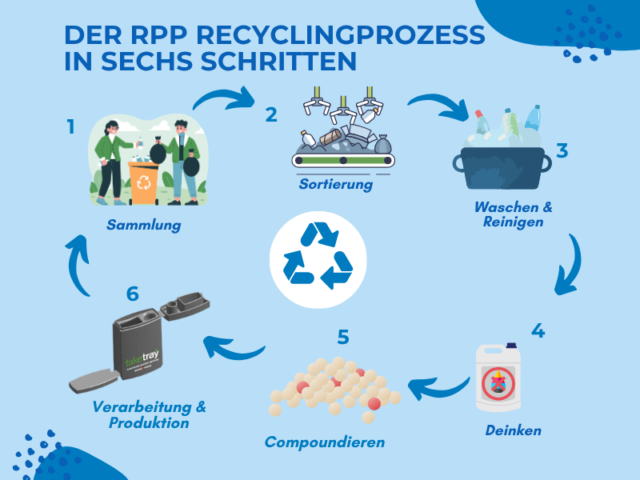
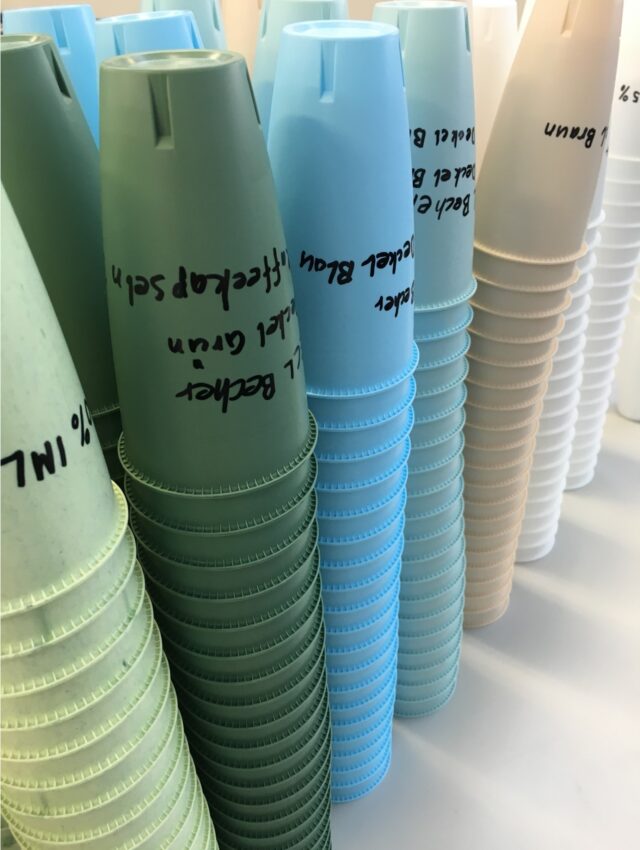
Photo: PP cups made from recycled material. (realcycle/KATZ)
Silac's Role in the Project
As a plastics processor, Silac brought practical experience in injection molding to the table. The focus was on how recycled materials can be processed on actual machines and what requirements this places on process control, tooling, material quality, and quality inspection.
Result
At the production facility in Euthal, the processing of the recycled pellets was successfully tested. The first prototypes were created from rPP pellets—including a food-grade dispenser insert, a snap-on cap for cosmetic applications, a storage container, and a pocket ashtray. The tests showed that rPP can be processed but requires adjusted process parameters. When it comes to coloring, pure white remains a challenge—alternatives such as gray are in demand.
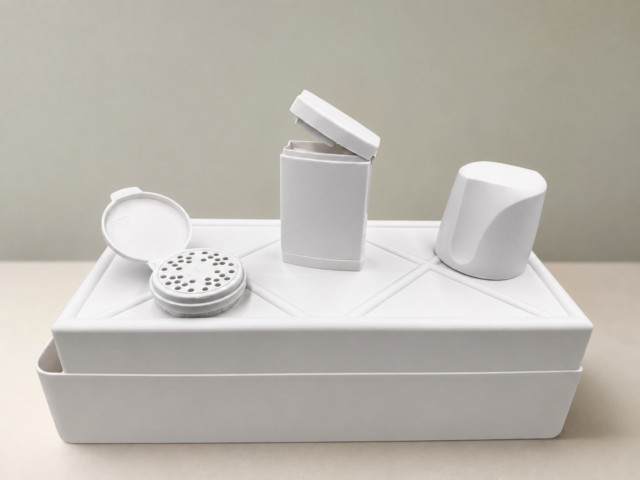
Photo: The prototypes manufactured by Silac.
What Silac learns from these tests also helps customers who want to make their own products more sustainable: Silac provides direct support in determining which recycled materials are suitable, what technical requirements the material must meet, and how a change in material affects the mold, the process, and quality.
In the News section, Silac provides ongoing coverage of projects, material tests, and developments related to recycled materials, sustainable plastics, and the circular economy.
Want to check your product's recyclability?
 +41 55 418 44 00
Mon–Fri 8:00 a.m.–12:00 p.m. / 1:00 p.m.–5:00 p.m.
 info@silac.ch
We’ll get back to you as soon as possible.
Social Media




Subscribe to the newsletter
Links
