









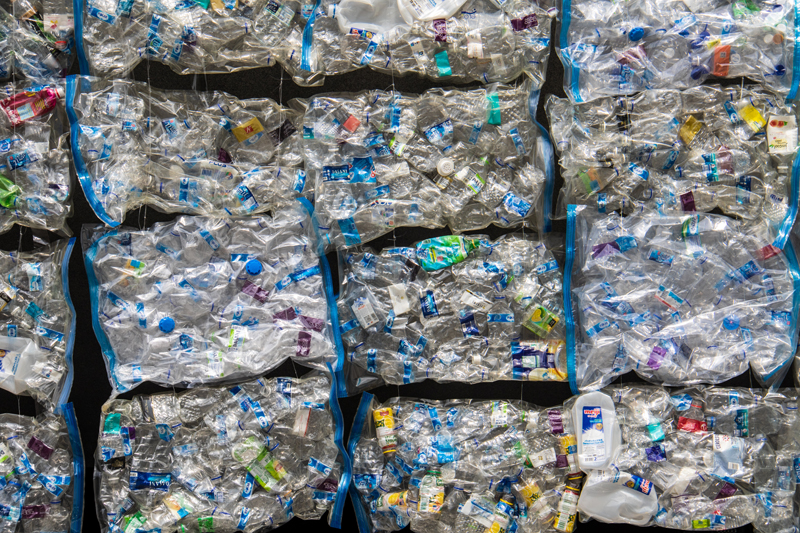
How can we reduce our enormous mountain of plastic waste? And why do we recycle only 10 percent of the plastic we throw away? The “Sammlung 2025” project aims to close the plastic loop in Switzerland. Silac is also actively involved in helping to close the loop for polypropylene food packaging. After all, the circular economy is the most promising solution!
High Per-Capita Plastic Consumption
At 127 kilograms per year, Switzerland has the highest per-capita plastic consumption in Europe. According to the marine conservation organization Oceancare, we produce 780,000 metric tons of plastic waste each year. Our plastic system is linear. Between 85 and 90 percent of all plastics are neither recycled nor reused, but incinerated. Only 10 percent of plastic waste is currently recycled. PET accounts for the largest share of this plastic waste. This is not surprising, as PET consistently achieves high recycling rates thanks to the extensive network of collection points established over the past 25 years. Last year, over 77 percent of the 45,460 metric tons of PET bottles sold were recycled. And what about the recycling of the remaining types of plastic?
Is there a lack of a standardized plastic recycling system?
Unlike our neighboring countries, Switzerland does not have a uniform, nationwide plastic collection system. Various municipalities and companies have taken the initiative and launched their own regional plastic recycling projects. Residents can collect their plastic waste mixed together in colorful plastic bags, deposit it in special containers at retail stores, or drop it off directly at recycling centers. While this is a well-intentioned approach, an analysis by the environmental consulting firm Carbotech AG shows that it performs poorly in terms of life cycle assessment and eco-efficiency. The cost-benefit ratio of separate plastic waste collection in Switzerland is about one-third as efficient as that of the PET recycling system.
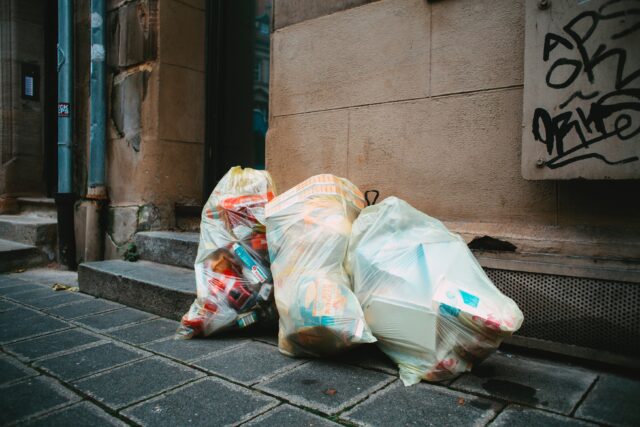
Individual collection solutions are not economically viable. There are too few collection points, the volume of plastic waste to be processed is too small, and the recycling processes required for all the different types of plastic are too complex. What is needed is a uniform, nationwide system for collecting plastics sorted by type. This is because, in principle, recycling plastics is preferable to energy recovery.
Design for Recycling
How can we reduce the amount of plastic waste in Switzerland in the future? Consuming less plastic is certainly one possible approach, but it depends on the willingness of the Swiss public and is difficult to monitor. A simpler solution is to take recycling into account right from the start of the supply chain, during the product design phase. The EU is leading the way. By 2023, all European packaging must be recyclable. And what about Switzerland? Here, too, there are similar policy initiatives that have led to the development of industry recommendations and specific “Design for Recycling” guidelines. After all, increasing recyclability is the foundation for a more circular economy.
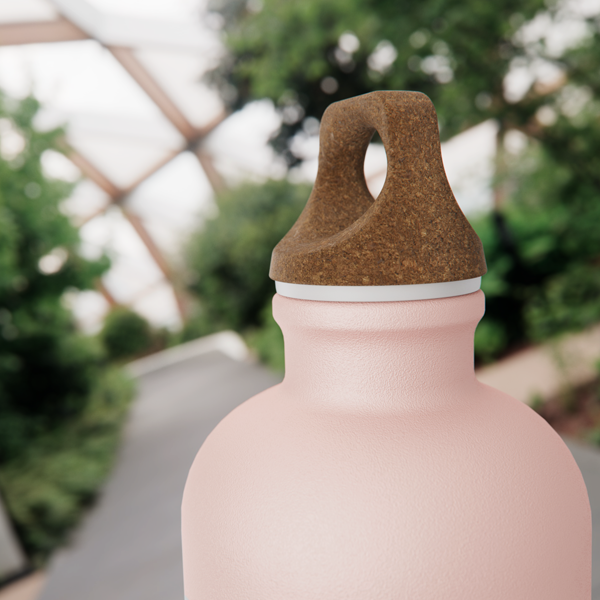
We could also reduce our use of plastics made from pure petroleum by incorporating bio-based raw materials into production. Silac is leading the way and already uses wood in the cap for the SIGG TravellerMyPlanet™ bottle. Other renewable raw materials, such as potato peels, whey, and coffee grounds, are still in the testing phase. The results are promising, so we hope to be able to use more bio-based plastics at Silac in the future.
Hub for the Circular Economy
To actively implement the circular economy in our country, Swiss Recycling has launched the “Circular Economy Hub.” Together with partners from across the entire value chain, solutions for a sustainable circular economy for packaging and products are being developed. Raw material suppliers, manufacturers, retailers, and recyclers come together at a roundtable to contribute their expertise and commitment. The overarching goal is to establish a national collection and recycling system for plastic packaging and beverage cartons. The project began in 2018 and already has over 80 partners. Silac is also actively involved in shaping the initiative.
Polypropylene Recycling Process

Polypropylene (PP) is a durable and flexible plastic that is frequently used in food packaging. Since 2020, realcycle GmbH (formerly REDILO GmbH) has been working to close the loop for polypropylene food packaging. The first two project phases focused on multiple recycling and technical recyclability. Silac is now involved in the third phase of the project and has actively contributed to an Innosuisse proposal on the topic of “Development of Closed Loops for Food-Contact rPP” (FCMrPP). The project is still in the evaluation phase at Innosuisse and is scheduled to begin in fall 2023. In this project, our experts, together with various partners such as Migros, Coop, and Emmi, as well as research institutes, will develop innovative solutions using recycled polypropylene (PP).

As an injection molding specialist, Silac is responsible for the practical processing of recycled materials in its own machines. The task involves identifying requirements, optimizing process parameters, and critically inspecting the final products. The goal of the project is to define the optimal recycling loop for polypropylene. A shared solution for a circular future.
We look forward to this exciting collaboration and the valuable exchange of knowledge—and, above all, to making a significant contribution to Switzerland’s circular economy. Further information can be found here.