









Anyone who labels packaging as “sustainable” today will have to be able to prove it in the future. The EU is getting serious: Under the Empowering Consumers Directive (EmpCo), environmental claims without independent certification will be prohibited starting in 2026. Terms such as “environmentally friendly,” “climate-neutral,” or “recycled” may then only be used if they are substantiated by a recognized, independently audited certification system. Companies that cannot provide such proof risk receiving warnings and suffering reputational damage. Silac is prepared—and has successfully renewed its ISCC PLUS certification.
What Has Changed Since 2024
Silac received ISCC PLUS (International Sustainability and Carbon Certification) certification for the first time in 2024. Since then, the landscape has changed: EU regulations on green claims are taking shape, pressure on companies is mounting, and ISCC has introduced a new option for brand owners through its Licensing Scheme. Three good reasons to take a fresh look at this topic.
What ISCC PLUS Means—and Why It’s More Than Just a Label

ISCC PLUS certification is a globally recognized, independent standard. It ensures that sustainable raw materials—recycled or bio-based materials—are traceable throughout the entire supply chain.
At the heart of this is the mass balance principle: Sustainable and conventional raw materials can be combined in production, as long as the amount of sustainable material is fully documented and tracked throughout the entire supply chain. This ensures that, in the end, exactly what was declared sustainable at the outset is what arrives at the end.
A key requirement here is that every link in the supply chain must be certified. A non-certified company may not pass on materials as ISCC-certified or issue corresponding sustainability declarations. Thanks to independent auditing, the system structurally prevents greenwashing.
A key advantage over other sustainability labels: ISCC PLUS already meets the requirements of the EmpCo Directive. The EU has recognized the system as an accredited certification scheme. For Silac’s customers, this means that sustainability claims based on ISCC PLUS certification will be legally protected starting in 2026.
Annual recertification: a deliberate decision

ISCC PLUS is not a one-time certification. It must be renewed every year through an independent audit conducted by an accredited certification body. The audit assesses traceability, quantity accounting, and compliance with chain-of-custody requirements. The annual renewal requires internal preparation, comprehensive documentation, and an external audit—a process that many companies shy away from.
Silac has nevertheless gone through the certification process again. For Managing Director Peter Birchler, this is a deliberate decision.
“Not many companies in our industry go to this trouble. For us, it’s a clear sign that we take sustainability seriously—and that we can prove it.”
What this means for our customers in concrete terms
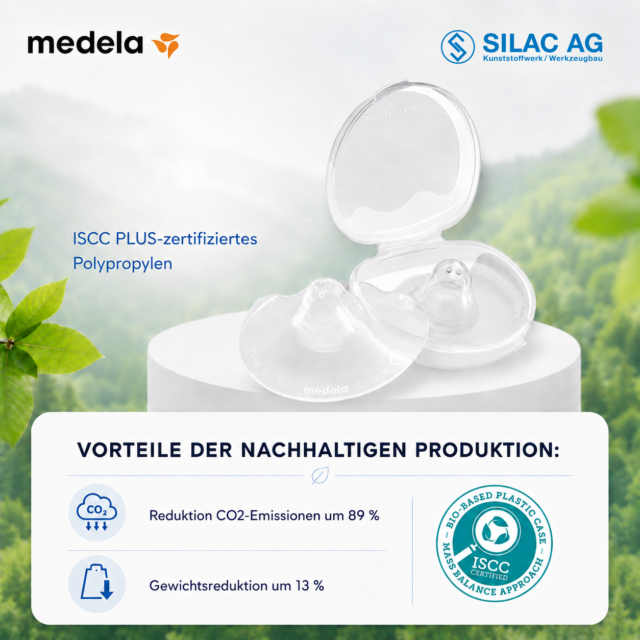
Certification is not just an internal matter. It has a direct impact on what Silac’s customers receive and can communicate. Anyone who purchases products from Silac made from ISCC PLUS-certified materials benefits from:
- Reducing the carbon footprint: Certified materials replace fossil-based raw materials and have been proven to improve a company’s carbon footprint. The example of the Medela breast shield box shows what is possible. The storage box for Contact™ nipple shields is made largely from recycled polypropylene—the weight of the plastic has been reduced by 13%, and CO₂ emissions per unit by 89%. Quality and functionality remain unchanged.
- Complete traceability: The origin of the materials used is documented and independently verified—from the source of the raw materials to the finished product.
- Legal Protection: With independently verified certification, sustainability claims will comply with the EU EmpCo Directive starting in 2026—no risk of legal action, no reputational risk.
- Credibility all the way to the end consumer: The ISCC PLUS label stands for verified sustainability—visible and traceable not only throughout the supply chain, but all the way to the finished product on the shelf.
New: ISCC Licensing for Brand Owners
In parallel with the certification process, ISCC has introduced a new tool: the Licensing Scheme for Brand Owners. It is aimed at brand owners at the end of the supply chain—that is, companies that bring finished products made with ISCC-certified materials to market without making any significant changes to the materials themselves.
The background: Not every company is directly involved in the processing of raw materials. A company that purchases a finished product made with ISCC-certified material and sells it under its own brand name does not need to go through the full certification process—it simply needs a license.
The practical difference from certification:
- The license does not require a mandatory annual audit by an external certification body.
- ISCC reserves the right to conduct random integrity checks.
- The license allows for the use of ISCC logos and claims on products—an important tool for communicating with end consumers.
Important: Anyone who actively processes or modifies materials must still rely on certification. Licensing is not a substitute, but rather a supplement—for those at the end of the supply chain who want to strengthen their sustainability messaging.
Silac has been both certified and licensed since 2024 and is able to guide and advise customers in this process.
Sustainability That Can Be Proven
Requirements are increasing—both regulatory and market-driven. End consumers want to know what’s in a product and where it comes from. Starting in 2026, the EU will grant them the right to verifiable claims. In this environment, independently verified certification is not just a “nice-to-have,” but a strategic tool.
Silac made an early investment—in certification, in the annual renewal process, and in licensing. This effort was a deliberate choice. After all, if you want to communicate sustainability, you must also be able to prove it.
Would you like to have your products manufactured using ISCC PLUS-certified materials? Get in touch—we’ll show you what Silac can do for you.
-> Quality
-> News on Sustainability
-> Product Sheet: Medela Nipple Shields